

NIPT has become increasingly common in pregnancy care over the past decade, but many people still aren’t entirely clear on what it actually is, how it differs from other screening tests, or whether they should have it.
Here’s the straightforward explanation without the medical jargon overload.
What NIPT Actually Tests For
NIPT analyses tiny fragments of fetal DNA that circulate in your bloodstream during pregnancy. From a simple blood sample, it can screen for chromosomal conditions – primarily Down’s syndrome (trisomy 21), Edwards’ syndrome (trisomy 18), and Patau’s syndrome (trisomy 13).
Some NIPT tests also screen for sex chromosome differences like Turner syndrome or Klinefelter syndrome, and can determine fetal sex with high accuracy from as early as 9-10 weeks.
The test doesn’t diagnose these conditions definitively – it’s still a screening test that assesses probability. But it’s significantly more accurate than older screening methods like the combined screening test.
How It’s Different From Other Screening Tests
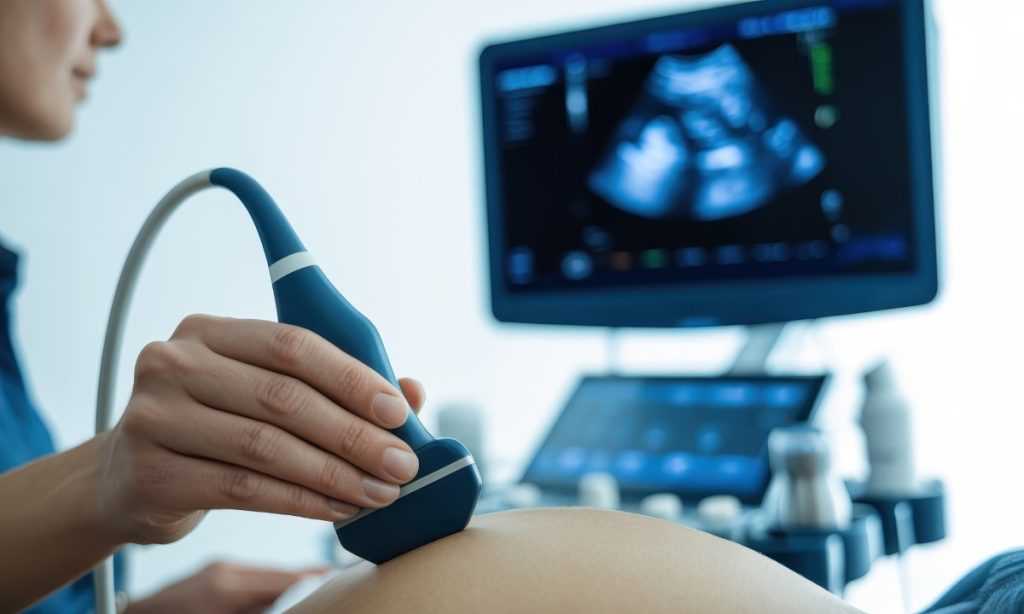
The combined screening test (offered on the NHS at 11-14 weeks) combines a blood test measuring specific hormones with an ultrasound measuring nuchal translucency. It gives you a risk assessment – something like 1 in 500 or 1 in 150 for chromosomal conditions.
The combined test has a detection rate of about 85% for Down’s syndrome with a false positive rate around 5%. That means it catches most cases but also flags some pregnancies as high risk when the baby is actually fine.
NIPT has a detection rate above 99% for Down’s syndrome and very low false positive rates (under 0.1% for Down’s syndrome). It’s far more accurate, which means fewer people getting worrying “high risk” results that turn out to be false alarms.
The trade-off is cost. Combined screening is free on the NHS for everyone. NIPT is only offered free if your combined screening comes back high risk (typically 1 in 150 or higher). Otherwise, you’re paying privately – usually £350-500.
When NIPT Is Offered
On the NHS, NIPT is offered as a follow-up test if your combined screening indicates higher risk for chromosomal conditions. Instead of immediately jumping to diagnostic tests like amniocentesis (which carry small miscarriage risks), NIPT provides another screening layer with much higher accuracy.
If NIPT also shows high probability of a chromosomal condition, then diagnostic testing would be offered to confirm.
Privately, NIPT can be done from around 10 weeks pregnancy without needing a high-risk combined screening result first. Some people choose to have it as their primary screening test, bypassing combined screening entirely or having it alongside.
Reasons people opt for private NIPT include:
- Wanting the most accurate screening available
- Previous pregnancy affected by chromosomal conditions
- Advanced maternal age (though age alone doesn’t determine whether NIPT is worthwhile)
- High anxiety around screening and wanting to avoid the stress of potentially inaccurate combined screening results
- Wanting to know fetal sex early for personal or medical reasons
What Having The Test Involves
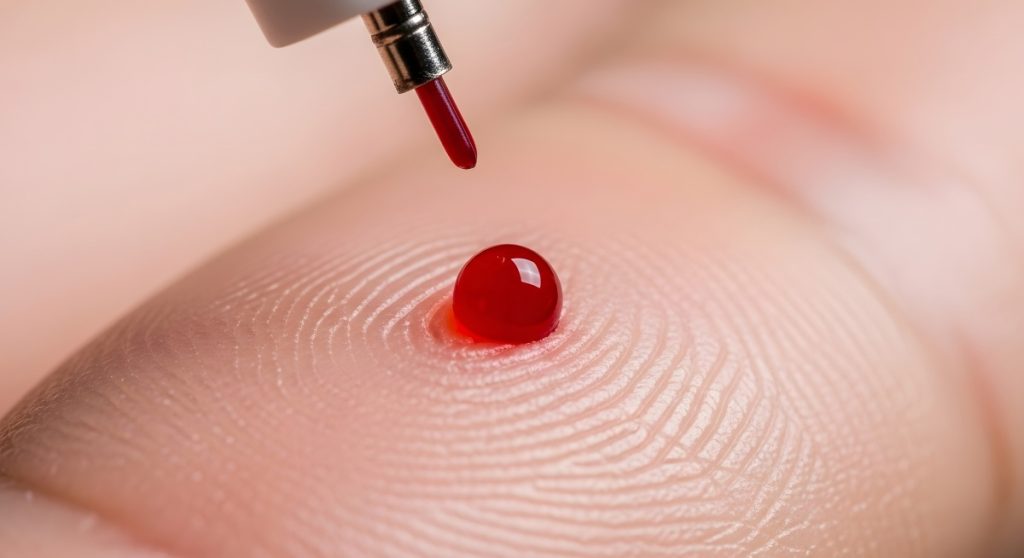
It’s literally just a blood test. No different from any other blood draw – needle in your arm, small vial of blood taken, done in a few minutes.
The sample gets sent to a laboratory where they analyse the cell-free fetal DNA floating in your blood (this DNA comes from the placenta and is present from early pregnancy).
Results typically come back in 7-14 days depending on the laboratory. Some private providers offer faster turnaround times for additional fees.
Understanding The Results
Results come back as either:
Low risk – This means the test found no indication of the screened chromosomal conditions. The chance of your baby having Down’s syndrome, Edwards’ syndrome, or Patau’s syndrome is very low (though not zero – no screening test is 100% accurate).
High risk – The test detected patterns suggesting one of the chromosomal conditions. This still doesn’t mean definitively that your baby has the condition – it means high probability that warrants diagnostic testing to confirm.
Inconclusive/failed test – Sometimes there isn’t enough fetal DNA in the sample to get a result (this happens in roughly 2-5% of cases). This is more common earlier in pregnancy, in women with higher BMI, or occasionally just randomly. You’d be offered a repeat test.
If you get a high-risk result, you’ll be offered diagnostic testing – either CVS (chorionic villus sampling) before 15 weeks or amniocentesis after 15 weeks. These tests analyse actual fetal cells and provide definitive yes/no answers about chromosomal conditions, but they carry a small risk of miscarriage (around 0.5-1%).
What NIPT Doesn’t Tell You
NIPT screens specifically for the most common chromosomal conditions. It doesn’t detect:
- Structural abnormalities like heart defects, spina bifida, or cleft palate
- Most genetic conditions that aren’t related to chromosome number
- Neural tube defects
- Many other conditions that might affect the baby
That’s what your 20-week anomaly scan is for. NIPT and the anomaly scan are complementary – they look for different things.
NIPT also doesn’t replace other pregnancy blood tests checking for things like anaemia, blood type, infections, or later tests for gestational diabetes. It’s very specific to chromosomal screening.
Limitations And Considerations
NIPT analyses DNA from the placenta, not directly from the baby. In rare cases (1-2%), the placenta has chromosomal differences that the baby doesn’t have (called confined placental mosaicism). This can lead to false positive results where NIPT indicates a chromosomal condition but diagnostic testing shows the baby is unaffected.
The test is less accurate for conditions other than Down’s syndrome. Detection rates for Edwards’ and Patau’s syndrome are still very high (97-99%) but slightly lower than for Down’s syndrome. For sex chromosome differences, accuracy drops to around 90-95%.
NIPT doesn’t work as well in twin pregnancies – it’s harder to analyse fetal DNA from two babies simultaneously, and determining which twin might be affected isn’t always possible with NIPT alone.
Very early pregnancy (before 10 weeks) sometimes doesn’t have sufficient fetal DNA for accurate results, which is why most providers recommend testing from 10 weeks onwards.
Making The Decision
Whether to have NIPT involves weighing several factors:
What would you do with the information? Some people want maximum information to prepare for a baby with additional needs or to make decisions about continuing the pregnancy. Others feel that screening would only create anxiety without changing their plans. Neither position is wrong – it’s intensely personal.
How would you handle uncertain or worrying results? Screening tests can create anxiety even when results ultimately turn out fine. Some people find the information reassuring. Others find the waiting and uncertainty stressful.
Financial considerations for private NIPT. Is £350-500 feasible for your situation? For some people, the improved accuracy justifies the cost. Others prefer to use the free NHS combined screening.
Your individual risk factors. Age, family history, previous affected pregnancy – these influence how likely chromosomal conditions are and therefore how valuable screening might be, though people of any age can have babies with chromosomal conditions.
Understanding common pregnancy tests explained helps contextualise where NIPT fits into the broader landscape of pregnancy screening and monitoring.
After The Test
If you receive low-risk results, pregnancy monitoring continues as normal – you’ll still have your anomaly scan and other routine pregnancy care, as NIPT only screens for specific chromosomal conditions.
If results are high-risk, you’ll be offered counselling and diagnostic testing. You don’t have to proceed with diagnostic tests if you don’t want to – some people prefer not to have amniocentesis or CVS and choose to continue pregnancy without definitive diagnosis.
Diagnostic testing provides certainty rather than probability. If you’re making significant decisions based on screening results, most healthcare professionals recommend confirming with diagnostic testing before finalising those decisions.
The Broader Picture
NIPT represents a significant advancement in prenatal screening – much more accurate than older methods, no risk to the pregnancy (unlike diagnostic tests), and available relatively early.
But it’s still screening, not diagnosis. And screening is optional – you’re never obliged to have any prenatal testing regardless of what’s recommended or what other people choose.
For trusted experts for antenatal health, Grosvenor Gardens Healthcare provides thorough pre-test counselling so you understand exactly what NIPT offers, what it doesn’t, and how results would be handled in your specific situation.
Think carefully about what information would actually be useful to you, how you’d use it, and whether the testing process would increase or decrease your anxiety during pregnancy. There’s no universally “right” choice – just the choice that makes sense for your individual circumstances and values.
NIPT is a tool providing information. What you do with that information – whether you have the test at all, how you interpret results, what decisions you make based on findings – remains entirely yours to determine.