

The early weeks of a first pregnancy exist in a strange emotional space. You know something extraordinary is happening, but there’s very little external confirmation of it. Symptoms come and go, and sometimes disappear for days at a stretch in ways that feel alarming when you don’t know what’s normal. The NHS anomaly scan at around eighteen to twenty weeks is months away. And the gap between a positive pregnancy test and that first official scan can feel very long indeed.
Reassurance scans exist for exactly this reason. They’re not medically required in low-risk pregnancies, and that’s precisely why they’re optional – but optional doesn’t mean unnecessary, and for many first-time mothers they provide something that medical necessity alone doesn’t capture: the confidence to actually begin enjoying the pregnancy.
What Is A Reassurance Scan?
A reassurance scan is a private early pregnancy ultrasound, typically performed between six and fourteen weeks of pregnancy, that confirms the pregnancy is developing in the right location, that there is a heartbeat, and that measurements are consistent with the gestational age. In most cases, it’s the first time a parent sees their baby on a screen.
The scan doesn’t replace NHS antenatal care. It sits alongside it, filling the waiting period with information and visual confirmation that the pregnancy is progressing as it should. For first-time mothers who have no previous pregnancy experience to contextualise what they’re feeling – or not feeling – that information has genuine practical value.
What Are The Specific Benefits For First-Time Mothers?
First pregnancies come with a particular kind of uncertainty that subsequent pregnancies rarely replicate. You don’t know what normal feels like yet. You don’t know whether the absence of symptoms one day is reassuring or worrying. You don’t know whether the cramps you felt this morning are ligament stretching or something that needs attention. Without a framework for interpreting what’s happening in your body, the early weeks can be dominated by anxiety rather than anticipation.
A reassurance scan answers the fundamental question that underlies most of that anxiety: is everything okay? Seeing a heartbeat on a screen at seven or eight weeks provides a concrete, visual answer that no amount of reading or reassurance from other people can quite replicate. It also confirms the location of the pregnancy, which rules out ectopic pregnancy – a condition that is more dangerous the longer it goes undiagnosed and that produces symptoms that can be difficult to distinguish from a normal early pregnancy.
For first-time mothers who have experienced previous anxiety, undergone fertility treatment, or who have a family history of pregnancy complications, the case for an early reassurance scan is even stronger.
At What Stage Of Pregnancy Can You Have A Reassurance Scan?
The earliest point at which a heartbeat can typically be detected on an abdominal ultrasound is around six to seven weeks of pregnancy. A transvaginal ultrasound – where the probe is placed internally for a clearer image – can detect cardiac activity from around five to six weeks in some cases. The gestational sac is visible from around four to five weeks.
Most women who opt for reassurance scanning do so between seven and ten weeks, when the heartbeat is reliably detectable and the measurements provide clear confirmation of dates and development. A second reassurance scan at twelve to thirteen weeks, around the time of the NHS dating scan, can be combined with additional screening for chromosomal conditions if that’s something you want to explore.
What Happens During A Reassurance Scan?
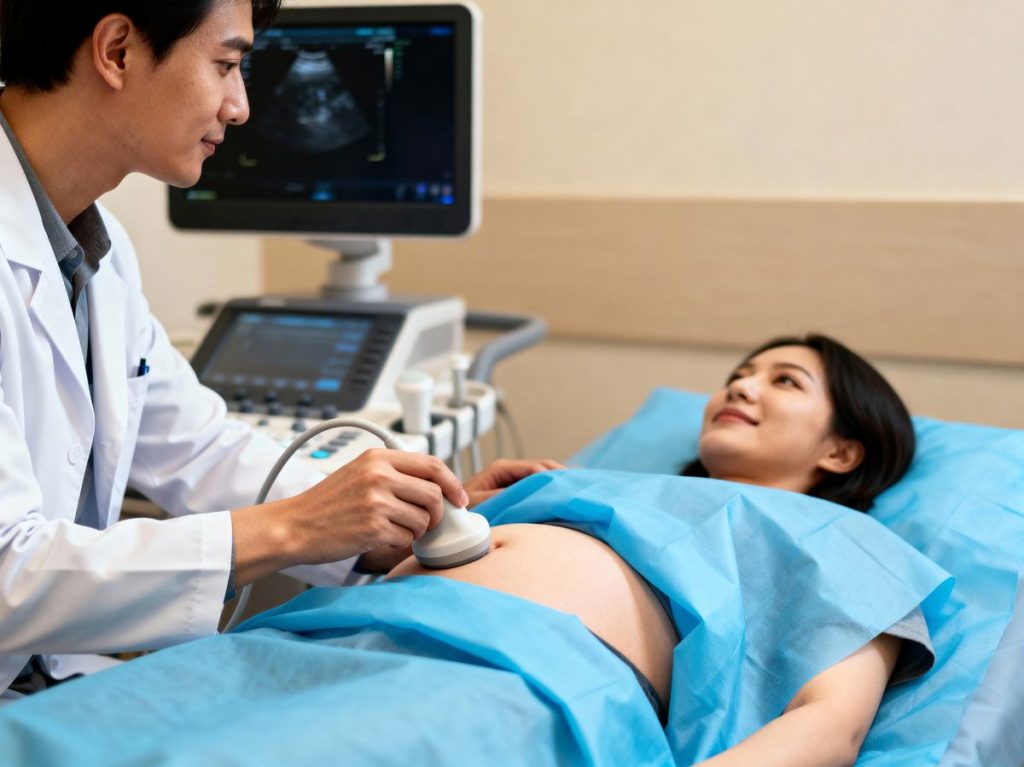
The scan is usually abdominal in the first instance, though a transvaginal scan may be recommended at very early gestational ages for a clearer image. The appointment is typically relaxed and unhurried, with the sonographer explaining what they’re seeing as the scan proceeds. You’ll be able to see the screen, hear the heartbeat, and ask questions throughout.
Most early pregnancy scans last between twenty and thirty minutes. You’ll receive images to take with you, and in the event that something requires further investigation, a good clinic will have the clinical infrastructure to discuss next steps immediately rather than sending you home to wait.
Your first trimester involves a lot of decisions and appointments, which is why we often recommend expecting mothers to create an early pregnancy checklist, in order to approach the whole period with more structure and less anxiety.
What If The Scan Shows Something Unexpected?
This is the worry that holds some women back from booking a reassurance scan, and it’s worth addressing directly. If a scan does show a concern – a heartbeat that is slower than expected, measurements that suggest a dating discrepancy, or in the most difficult cases, a pregnancy that isn’t progressing – the right response is that you know sooner rather than later. Early information gives you more options and more time, whether that means further monitoring, additional scans, or medical support.
The overwhelming majority of reassurance scans produce exactly what parents hope to see. But the value of early scanning lies partly in the fact that it identifies the minority of cases where something does need attention – and does so at the earliest possible point.
Why Grosvenor Gardens Healthcare
Grosvenor Gardens Healthcare offers clinical ultrasound assessments for expectant parents at our Belgravia and Dulwich clinics, with state-of-the-art scanning equipment including 3D and 4D capability.
Appointments are available promptly, with no lengthy wait between wanting a scan and having one. If you’re in the early weeks of your first pregnancy and the waiting feels harder than it should, book a reassurance scan with Grosvenor Gardens Healthcare and replace the uncertainty with something more useful.
FAQs
Is an early reassurance scan safe for my baby?
Yes. Ultrasound has been used in obstetric care for decades and is considered safe throughout pregnancy. There is no ionising radiation involved. The sound waves used do not harm the developing pregnancy, and the benefit of the information provided by an early scan – including ruling out ectopic pregnancy and confirming a heartbeat – is well established clinically.
At what week is it best to book a first reassurance scan?
Most first-time mothers find seven to nine weeks a good window. At this point, the heartbeat is clearly detectable on an abdominal scan, gestational age can be accurately confirmed, and the pregnancy is visible enough to provide the reassurance the scan is intended to give. Very early scans before six weeks may not yet show a heartbeat even in a healthy pregnancy, which can create unnecessary worry.
Can I bring my partner to a reassurance scan?
Yes, and most clinics actively encourage it. The early weeks of pregnancy can feel isolating for partners who have no physical symptoms to connect the experience to, and seeing the heartbeat together can be a significant moment for both of you. Check with your clinic beforehand, but attending together is welcomed in the vast majority of private early pregnancy scanning settings.
Do I need a referral for a private early pregnancy scan?
No. Private pregnancy scans can be booked directly without a GP or midwife referral. You don’t need to be registered with the clinic for any other purpose. Booking is typically straightforward, with appointments often available within a few days of enquiry.
What’s the difference between a reassurance scan and the NHS dating scan?
The NHS dating scan, offered at around eleven to thirteen weeks, confirms gestational age, checks for major structural issues, and offers combined screening for Down’s syndrome. A private reassurance scan is typically done earlier – between six and ten weeks – with the primary purpose of confirming the location and viability of the pregnancy and detecting a heartbeat. The two serve different but complementary functions, and having an early reassurance scan doesn’t replace the NHS dating scan.