

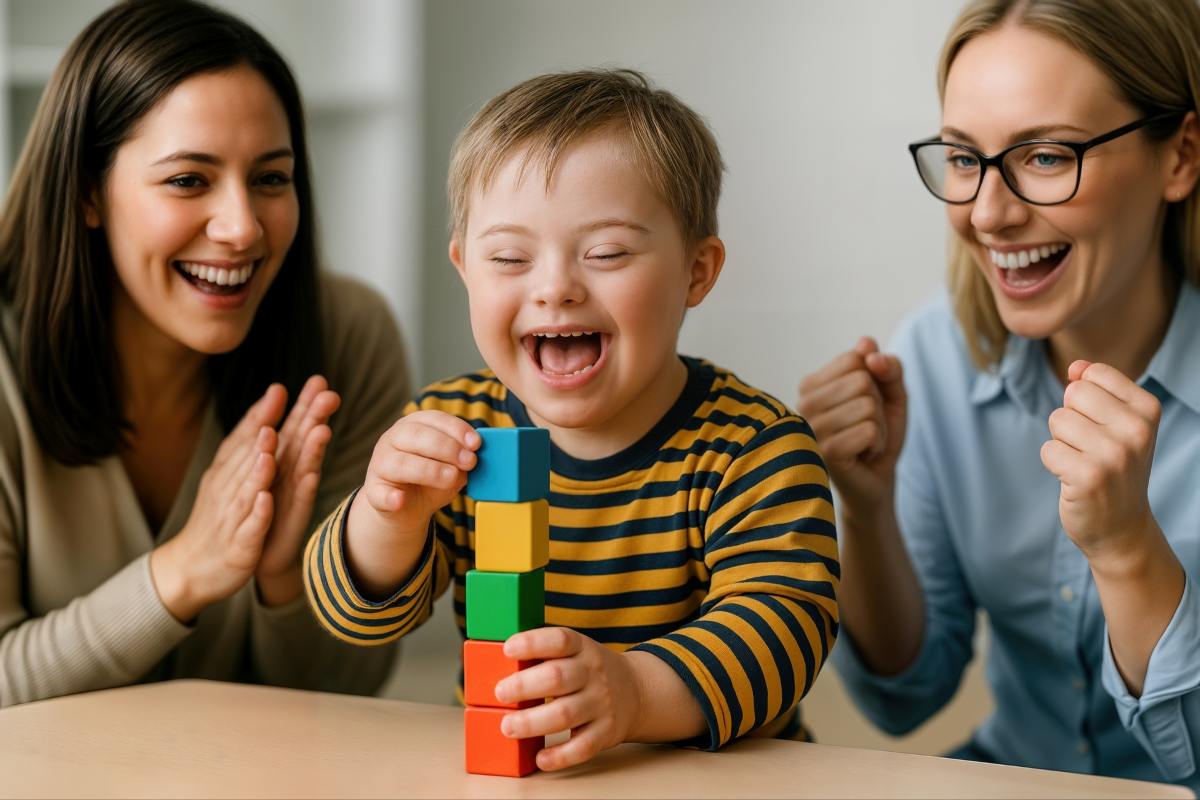
Every parent has experienced the particular anxiety of comparing their child to the children of friends, relatives, or anyone else in the vicinity. She’s not walking yet, but their daughter was walking at ten months. He doesn’t have many words, but their son was putting sentences together at eighteen months. It’s almost impossible not to compare, even when you know intellectually that children develop at different rates.
The concept of developmental milestones exists to help make sense of this, offering general windows within which most children achieve particular skills. But the word “delay” – when used in a clinical sense – has a specific meaning that’s worth understanding clearly, both to avoid unnecessary worry when things are simply within normal variation, and to recognise when earlier assessment really is the right move.
What Developmental Milestones Actually Represent
Developmental milestones are not a checklist of things children must do at precise ages. They represent ranges, informed by large populations of children, within which particular skills typically emerge. Walking independently, for instance, is described as emerging between roughly nine and fifteen months for most children – so a child who walks at fourteen months is well within normal range, even if their peers were all walking at ten or eleven months.
The domains that are typically tracked include gross motor development (large movements like sitting, crawling, standing, walking), fine motor development (smaller, more precise movements like picking up objects, drawing, using cutlery), speech and language, cognitive development (problem-solving, memory, understanding concepts), and social and emotional development (interaction, play, understanding emotions).
Delays in any one of these areas, or across multiple areas simultaneously, can signal that a child would benefit from assessment. But it’s the pattern and persistence of differences, rather than a single data point at a single age, that tends to be most meaningful.
What Causes Developmental Delays?
The causes are genuinely varied, and identifying a cause isn’t always possible – nor is it always necessary for effective support. Some children have genetic conditions (such as Down’s syndrome or fragile X syndrome) that affect development broadly. Others may have specific neurological differences, such as those associated with autism spectrum disorder, cerebral palsy, or attention deficit disorders, which affect some areas of development more than others. Hearing or vision impairments, if undetected, can significantly affect language and social development in ways that might otherwise appear to be a developmental delay. Premature birth is associated with a range of developmental differences, partly because many milestones relate to gestational age rather than chronological age.
And sometimes, a child is simply at the slower end of a wide and entirely normal range.
The point is that developmental delay is a description of a pattern, not a diagnosis in itself. Assessment is about understanding why a child is developing differently, which then guides what kind of support is most helpful.
Signs That May Warrant Assessment
It’s worth knowing some of the specific patterns that tend to prompt paediatric review. By the time a child is one year old, not babbling, not making eye contact, or not responding to their name are things that deserve attention. Loss of skills that a child previously had – at any age – is something to take seriously and raise with a professional promptly; this regression can occasionally indicate an underlying neurological issue.
For speech and language, a common rough guide suggests that children should have around 50 words by 24 months and be combining two words into short phrases. Children who haven’t reached this point by the age of two are often referred for a speech and language evaluation, though it’s important to note that bilingual children may take slightly longer to establish vocabulary in each language.
A child who’s not walking independently by 18 months, or who has a noticeably asymmetrical gait, warrants motor assessment. Persistent difficulties with tasks requiring hand coordination – holding a pencil, manipulating small objects, doing up buttons – can be worth exploring beyond the early years too.
Our page on child development milestones offers a helpful overview of what to look for across different ages and developmental domains.
The Importance of Early Assessment

If there’s one thing consistently supported by evidence in this area, it’s that earlier identification and support leads to better outcomes. The brain is at its most plastic in the early years, which means that targeted intervention during this period – whether that’s speech and language therapy, physiotherapy, occupational therapy, or specialist educational support – tends to have more impact than the same intervention later on.
Early assessment also helps families. Understanding why a child is struggling removes a significant amount of the uncertainty and self-blame that can accumulate when parents notice differences but don’t have an explanation. A diagnosis or identification of a specific area of difficulty doesn’t change the child, but it does change what kind of help is available to them.
What Happens During a Developmental Assessment?
A paediatric developmental assessment typically involves a detailed history covering pregnancy, birth, early feeding, family history, and the child’s developmental progress to date. The clinician will observe the child directly, looking at how they move, communicate, interact, and engage with tasks. Depending on what’s found, onward referrals to specialists such as speech and language therapists, physiotherapists, educational psychologists, or other paediatric sub-specialists may follow.
At Grosvenor Gardens Healthcare, our specialist health support for children in London includes experienced paediatric assessment with time given to understand each child as an individual. For parents who’ve been waiting for answers, or who want a clearer picture sooner than NHS waiting lists may allow, private paediatric assessment can be a genuinely valuable route.
A Note on Parental Instinct
Finally: if something feels off to you as a parent, that feeling is worth acting on. Parents know their children better than anyone, and a concern that keeps resurfacing probably deserves a professional opinion rather than repeated reassurance. Raising a concern and being told everything is fine is a good outcome. Raising a concern and discovering something that needs support is also a good outcome. Not raising a concern because you’re worried about overreacting is, on balance, the option with the least to recommend it.