

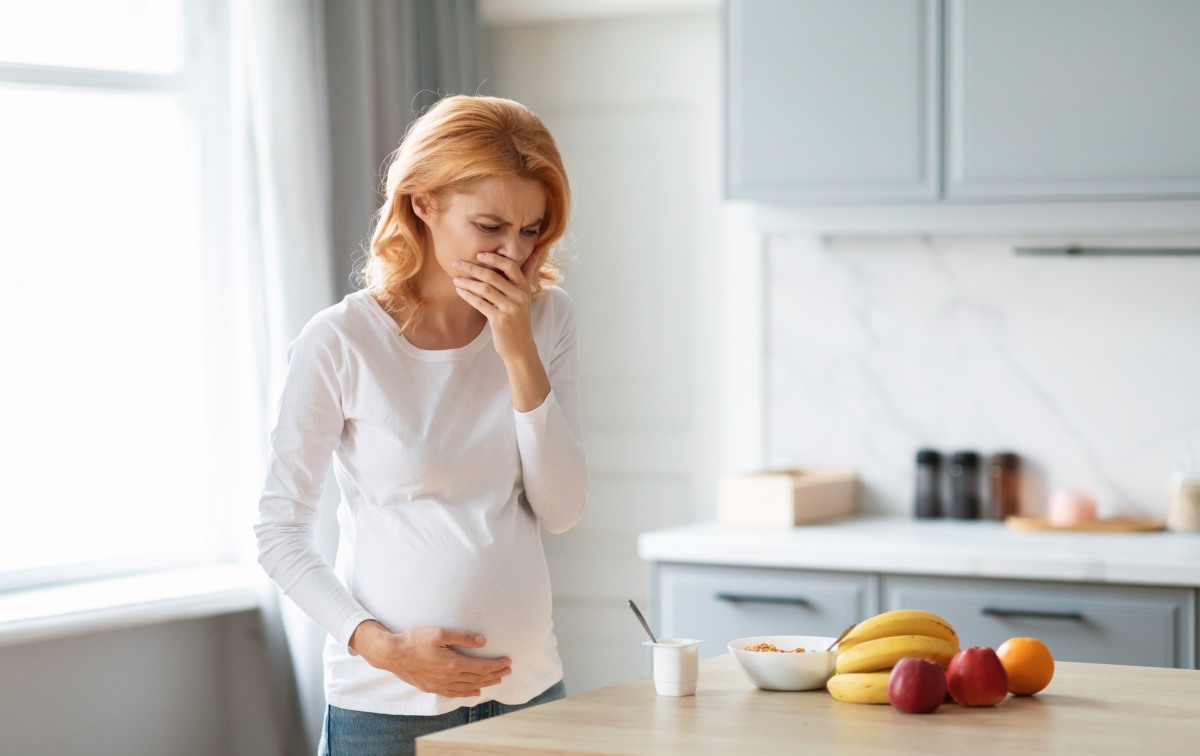
The name “morning sickness” is one of the great misnomers of pregnancy. For many women, the nausea isn’t confined to mornings, isn’t always sickness in the textbook sense, and doesn’t respect the gentle framing the term suggests. If you’ve been struggling with pregnancy nausea and wondering whether what you’re experiencing is normal, whether there’s anything that actually helps, and when (if ever) it might end, this guide is for you.
You deserve real information, not platitudes about ginger biscuits.
When Does Morning Sickness Usually Start?
For most women, morning sickness begins between four and six weeks of pregnancy, often coinciding with the time you might first realise you’re pregnant. It typically peaks around eight to ten weeks and starts easing for many women between 12 and 16 weeks, though there’s significant individual variation.
Some women experience nausea earlier, even before a positive pregnancy test. Others don’t develop symptoms until several weeks in. A small minority don’t experience morning sickness at all, which is sometimes worrying for women who’ve heard nausea is a sign of healthy pregnancy. Please don’t let absence of nausea cause you anxiety; many women with no symptoms at all have entirely healthy pregnancies.
If your nausea persists significantly beyond 16 to 20 weeks, that’s worth discussing with your maternity team rather than assuming it’s just particularly stubborn morning sickness.
Why Does Morning Sickness Happen?
The honest answer is that we don’t fully understand the mechanism, though several factors are clearly involved. Rising levels of human chorionic gonadotropin (hCG) correlate with nausea timing and severity, and the higher hCG levels in twin pregnancies often produce more pronounced symptoms. Oestrogen, progesterone, and changes in stomach motility all likely contribute.
There may also be an evolutionary protective component, with theories suggesting morning sickness developed to help expectant mothers avoid foods that might harm developing embryos during the most vulnerable weeks of pregnancy. The food aversions that often accompany nausea fit this theory, though the picture is incomplete.
Whatever the underlying mechanism, please understand that morning sickness isn’t psychological, isn’t a sign you’re not coping, and isn’t something you should feel embarrassed about. It’s a physiological response to early pregnancy, and it’s genuinely difficult to live with.
What Actually Helps?
The internet is full of suggestions, many of which are unhelpful or simply untested. Here’s what genuinely tends to help, based on clinical evidence rather than folklore.
- Eating little and often is consistently helpful. An empty stomach often worsens nausea, but a full stomach can also trigger it. Small, frequent snacks throughout the day tend to keep both extremes at bay. Many women find that a few plain crackers or a piece of dry toast before getting out of bed in the morning helps.
- Identifying and avoiding triggers is worth taking seriously. Specific smells, foods, or even visual cues can become significant triggers during early pregnancy. Cooking smells, perfume, certain foods, and temperature extremes are common offenders. If you can identify yours, avoiding them isn’t being precious; it’s sensible self-management.
- Hydration matters even when drinking feels difficult. Sips of cool water, ice chips, electrolyte drinks, or weak ginger tea can all help. Sometimes cold drinks are tolerated better than warm ones, sometimes the reverse; experiment to find what works for you.
- Ginger has reasonable evidence behind it for mild to moderate nausea. Ginger biscuits, ginger tea, ginger sweets, or ginger capsules can all help, though they’re not a magic cure for severe symptoms.
- Acupressure wristbands (the kind sold for travel sickness) help some women significantly and have no side effects worth worrying about. They’re inexpensive and worth trying.
- Vitamin B6 (pyridoxine) has good evidence for reducing nausea in pregnancy and is recommended in many clinical guidelines as a first-line treatment. Speak to your GP or pharmacist about appropriate dosing.
- Rest when you can. Fatigue makes nausea worse, and the exhaustion of early pregnancy is real. If your circumstances allow, prioritising rest in the first trimester isn’t indulgent; it’s medically sensible.
When Morning Sickness Isn’t Just Morning Sickness
For around 1 to 3% of pregnant women, nausea and vomiting becomes severe enough to warrant a different diagnosis: hyperemesis gravidarum. This is far more than ordinary morning sickness, involving persistent severe vomiting, dehydration, weight loss, and inability to keep food or fluids down.
Hyperemesis gravidarum is a medical condition that needs treatment, not endurance. If you’re vomiting multiple times daily, can’t keep fluids down for more than a few hours, are losing weight, feel dizzy when standing, are passing little or no urine, or your urine has become dark, please seek medical help promptly. There are effective treatments, including anti-emetic medications proven safe in pregnancy and intravenous fluids when needed.
Please don’t suffer through hyperemesis under the misapprehension that pregnancy nausea is just something you have to tolerate. It isn’t, and effective help exists.
Medications for Pregnancy Nausea

If lifestyle measures aren’t enough and your nausea is significantly affecting your wellbeing, anti-emetic medications can genuinely help. Several options have strong safety records in pregnancy, including cyclizine, promethazine, and ondansetron.
There’s still occasionally cultural reluctance to use medication in pregnancy, and many women try to white-knuckle their way through severe nausea because they’ve absorbed the message that medication should be avoided. The reality is more nuanced. Untreated severe nausea has its own risks (dehydration, weight loss, mental health impact), and treating it appropriately is good medicine.
Speak to your GP or obstetrician about what’s right for your situation. Decisions about medication should be informed by your specific circumstances rather than blanket rules.
Mental Health and Morning Sickness
The psychological toll of severe pregnancy nausea is significant and often underacknowledged. Constant nausea is exhausting, isolating, and can dampen the joy of early pregnancy in ways that catch women off guard. If you’re struggling emotionally as well as physically, please mention this to your maternity team.
Some women experience genuine antenatal depression triggered or worsened by severe morning sickness. This is treatable and deserves proper attention, not just stoic endurance.
Looking After the Whole You
Our first trimester pregnancy checklist covers the practical considerations of these early weeks, which often blur together when you’re feeling unwell. Knowing what to expect (and what’s worth raising with your care team) can make this time feel more manageable.
And in-clinic, we provide trusted obstetric care for expectant mothers with consultants who understand that pregnancy isn’t just a medical event but a profoundly personal one. If morning sickness is making your early pregnancy harder than you expected, please don’t feel you need to manage it alone. Get in touch, and let’s work out what will actually help.