
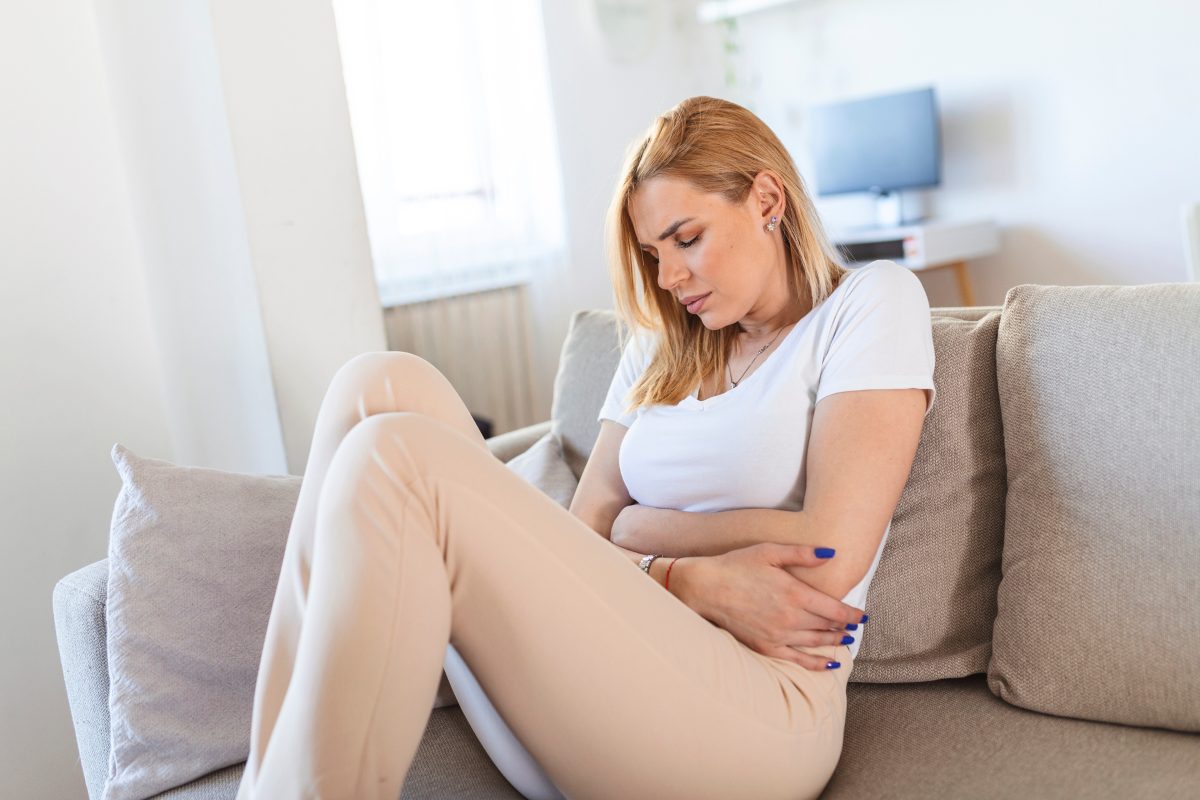
If you’ve ever felt a sharp or cramping pain on one side of your lower abdomen midway through your cycle, you’ve likely experienced mittelschmerz. It’s a word borrowed from German, meaning “middle pain,” and it describes exactly that: discomfort that occurs around the time of ovulation, roughly in the middle of the menstrual cycle. It’s surprisingly common, affecting an estimated one in five women, yet it often goes unrecognised simply because many people don’t know it exists.
For most women, mittelschmerz is a minor inconvenience at most – a brief, manageable sensation that confirms ovulation is happening. But the experience varies considerably from person to person, and there’s a real question worth exploring: at what point does ovulation pain cross from normal into something that deserves medical attention?
What’s Actually Happening During Ovulation
To understand the pain, it helps to understand the process. Each month, a mature follicle on one of the ovaries ruptures to release an egg. That rupture is the key event. The follicle grows and stretches the ovarian surface before releasing the egg, and the release itself can cause a small amount of fluid or blood to escape into the pelvic cavity. This fluid can irritate the pelvic lining, which is thought to be the primary source of the pain.
Because ovulation typically alternates between ovaries (though not always in a strict pattern), the side on which you feel pain may change from month to month. Some women find it consistently on one side; others notice it shifting. Both are normal.
What Normal Ovulation Pain Feels Like
Typical mittelschmerz has a fairly recognisable character. It tends to appear suddenly, on one side of the lower abdomen, usually 14 days before the next expected period. The sensation is often described as a twinge, cramp, or sharp jab – sometimes brief and stabbing, sometimes a duller ache that lingers for a few hours. Occasionally it can last up to two days, though anything beyond that is worth noting
Light spotting can accompany ovulation pain, which some women find alarming but is generally harmless. A feeling of general pelvic fullness or mild bloating around ovulation time is also fairly typical. The pain should be manageable without strong medication, and it should resolve on its own.
When Pain Becomes a Concern

This is where things get more nuanced, because not all mid-cycle pain is simply mittelschmerz. Several conditions can cause pain that coincides with ovulation timing but has a different underlying cause.
Endometriosis can cause ovulation-related pain that is significantly more intense than typical mittelschmerz. If your mid-cycle pain is severe enough to interfere with your daily activities, if it’s getting progressively worse over time, or if it’s accompanied by painful periods, pain during sex, or digestive symptoms, endometriosis should be considered as a possibility.
Ovarian cysts can rupture or cause discomfort around the time of ovulation, producing pain that may be sharper or more sustained than expected. A cyst that ruptures can cause sudden, severe pain, sometimes with nausea or dizziness, and this requires prompt medical assessment rather than a “wait and see” approach.
Pelvic inflammatory disease (PID) can cause cyclical pelvic pain that might be mistaken for ovulation pain. It’s typically accompanied by other symptoms such as unusual discharge, fever, or pain that’s present more broadly rather than just mid-cycle, but it can be difficult to distinguish without examination.
Our page on common ovulation symptoms explained offers helpful context on what the ovulatory phase typically involves, and knowing what’s within the expected range is genuinely useful for recognising when something falls outside it.
As a rough guide, the following warrant professional assessment rather than continued self-management:
- Pain that is severe, sudden, or accompanied by nausea or vomiting
- Pain that lasts more than two to three days
- Pain that is worsening cycle on cycle
- Mid-cycle pain alongside heavy periods, pain during sex, or fertility difficulties
- Any pain associated with fever, unusual vaginal discharge, or urinary symptoms
How Ovulation Pain Is Assessed
If you do seek medical advice about mid-cycle pain, a clinician will likely start with a detailed history, asking about the pain’s character, timing, duration, and any accompanying symptoms. A pelvic ultrasound is often the next step, as it can identify ovarian cysts, signs of endometriosis, or other structural concerns. Blood tests may be used to assess hormonal levels or rule out infection.
For many women, the result of this kind of assessment is reassurance – confirmation that what they’re experiencing is straightforward ovulation discomfort. But for others, investigation uncovers something that benefits from treatment: a cyst that needs monitoring, or early endometriosis that can be managed before it becomes more problematic.
Living with Mittelschmerz
For women experiencing typical, manageable ovulation pain, there are a few practical approaches. Over-the-counter pain relief such as ibuprofen, taken as the pain begins, is effective for many people. A warm heat pad applied to the lower abdomen can help ease cramping. Some women find that hormonal contraception suppresses ovulation entirely, which eliminates mittelschmerz by removing its cause – though this is obviously not suitable for those trying to conceive.
Interestingly, some women find their ovulation pain useful in a positive sense, as a natural indicator of when they’re ovulating. For anyone tracking their cycle for fertility awareness purposes, mittelschmerz can be one data point among several, though it shouldn’t be relied upon as a precise predictor of fertile days on its own.
A Final Word
Most mid-cycle pain is exactly what it appears to be: a normal, if inconvenient, part of the ovulatory process. But “normal” has limits, and pain that’s severe, worsening, or accompanied by other symptoms should be taken seriously. You don’t need to manage ongoing discomfort without support. At Grosvenor Gardens Healthcare, we offer expert care for women’s and children’s health – and that includes helping you understand what your body is doing and why.